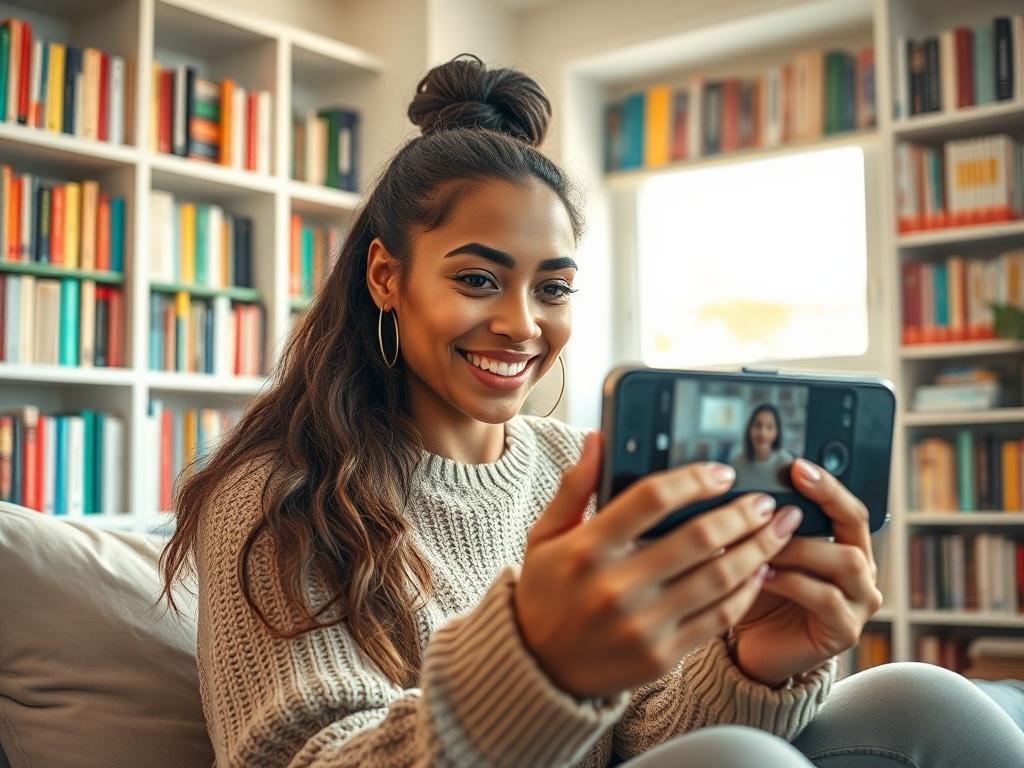
If you've been in a bookstore in the past two years, you've probably seen a table labeled "BookTok Made Me Buy It."
What started as a niche corner of TikTok has become the single most influential force in book discovery among readers under 40. It's revived print sales, created overnight bestsellers, and fundamentally changed how books are marketed and sold.
But here's what most authors—and even most publishers—still don't understand: BookTok isn't a marketing channel you can buy your way into. It's a culture. And cultures don't respond to traditional advertising.
This post breaks down how social media actually moves books, what the data really shows, and why the publishing industry's attempts to "control" BookTok are mostly failing.
BookTok is the community-driven corner of TikTok where readers (mostly 16-35 years old) share book recommendations, reviews, dramatic readings, and emotional reactions. It's not a publisher initiative. It's not an Amazon program. It's organic culture.
BookTok has created bestsellers that traditional publishers didn't see coming:
Romance, fantasy, YA, and contemporary fiction have been the biggest beneficiaries, but the effect is spreading across genres.
BookTok's primary audience is:
This is a fundamentally different audience than traditional publishing's legacy readership (45+ educated women). It's younger, more visual, and more community-driven.
BookTok works because it's peer-to-peer recommendation, not top-down advertising.
When a 19-year-old cries on camera about how a book "destroyed her emotionally," that's not a commercial. It's a genuine reaction. And it sells books because authenticity is the currency of social media.
Traditional publishers have tried to "buy" BookTok:
Most of these efforts fail or underperform because:
TikTok's algorithm (which powers BookTok) is optimized for emotional engagement and community reaction, not keyword optimization or ad spend.
What performs:
What doesn't perform:
BookTok has a self-reinforcing loop:
This is why a book can go from "unknown" to "bestseller" in 48 hours. It's not marketing spend—it's network-driven virality.
BookTok started the trend, but it's spreading.
Bookstagram (book-focused Instagram) has always been strong, but Reels have accelerated it:
Instagram's audience skews slightly older (25-45) than TikTok, but the book community there is massive and highly engaged.
YouTube Shorts (vertical videos under 60 seconds) are newer but growing fast:
YouTube's advantage: longevity. A TikTok video has a 24-48 hour half-life. A YouTube Short can surface in recommendations for months.
Smart authors and publishers are creating content that works across all three:
This multiplies reach without multiplying work.
Most traditional publishers are approaching social media the way they approached advertising in 1995: buy influence, control the message, measure ROI.
Here's how that's failing:
Publishers pay BookTok creators $500-$5,000 per post. The posts often underperform because:
Penguin Random House, HarperCollins, and others have official BookTok accounts. They have millions of followers but low engagement because:
BookTok videos work because they're raw. Real lighting, real emotions, real reactions.
Publishers try to make polished, well-lit, professionally edited videos. They underperform because they don't match the platform's aesthetic.
Publishers track:
BookTok creators track:
The metrics that matter on social media are community engagement, not commercial conversion.
Here's what actually drives book sales on social media:
When a real reader (not a paid influencer) posts about your book with genuine emotion, it drives sales.
How to create this:
Books that do well on social media have a clear, shareable premise:
Vague descriptions like "a compelling story about family" don't work.
Books that photograph well (beautiful covers, interesting settings) perform better.
This is why "book haul" videos are so popular. The aesthetic pleasure of seeing 10 beautiful books stacked matters.
Authors who engage with their social media community (commenting, responding, reposting) see better results than those who post and disappear.
This is time-intensive but effective.
A video that goes viral on TikTok should be immediately cross-posted to Instagram Reels and YouTube Shorts to maximize reach.
Timing matters. Striking while the iron is hot multiplies impact.
Even if you write for older audiences, this shift matters because:
The 19-year-old discovering books on TikTok today will be the 35-year-old buying business books, memoirs, and literary fiction in 15 years.
Understanding how they discover books now predicts how they'll discover books later.
Many BookTok videos are shared on Facebook, Twitter, and in text messages to mothers, aunts, and friends.
The viral moments cascade upward in age, not just downward.
When a book goes viral on BookTok, traditional media (Morning shows, NPR, major newspapers) covers it. The New York Times now has a regular "BookTok" column.
Social media virality drives mainstream media coverage, not the other way around.
If you're an author or publisher trying to understand social media's impact, stop tracking:
Start tracking:
The first three indicate viral potential. The last two indicate actual business impact.
If you're publishing a book in 2025, here's what you need to know:
Even if you hate TikTok, your book's discoverability will be impacted by social media.
Your options:
If you can't describe your book in one sentence that would make someone emotional, it's unlikely to go viral.
Examples that work:
A glowing New York Times review is nice. A viral BookTok video is better for sales.
This is a fundamental shift in how books are discovered.
One viral video is nice. Sustained community engagement is better.
Authors who succeed on social media post consistently, engage genuinely, and build community over months and years.
Traditional publishers are structurally incapable of doing social media well:
Hybrid publishers (especially those with in-house PR teams) can:
The future of book marketing isn't corporate social media accounts. It's authors building authentic communities with publisher support.
Word-of-mouth has always been the most powerful sales driver in publishing.
Social media hasn't replaced word-of-mouth. It's amplified and accelerated it.
A reader telling their book club about your book might influence 5-10 sales. That same reader posting a genuine BookTok video might influence 5,000-10,000 sales.
The mechanism is the same (peer recommendation). The scale is different (global vs. local). The speed is different (24 hours vs. 6 months).
Publishers who understand this are thriving. Publishers who don't are watching their midlist die.
The question for you is: which side do you want to be on?
The Agency at Brown Books helps authors build authentic social media strategies that complement their overall visibility plan. We don't create corporate content—we help real authors connect with real readers.
Joanna Stone is the Managing Director of The Agency at Brown Books, where she leads public relations and digital marketing for authors. She specializes in building success stories that sell books and careers by pairing smart media strategy with modern digital campaigns.
Book PR Insider is where we share what we're actually seeing work for authors in real time—the media shifts, the campaigns that moved books, the visibility strategies that matter. No playbooks. No generic tips. Just the unfiltered perspective from people working in publishing and PR every single day.
Thank you for signing up!
Something went wrong. Please try again later.